
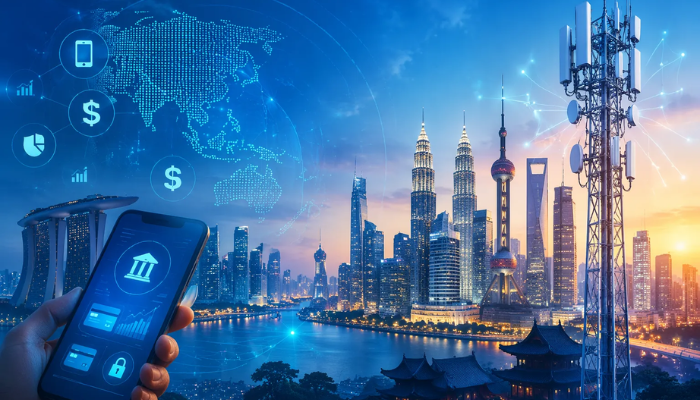
The rise of fintechasia .net telekom marks a transformative shift in how financial services are delivered across Asia. As digital ecosystems evolve, the intersection of telecommunications and financial technology is unlocking new possibilities for businesses, consumers, and underserved populations. This hybrid model is not just an innovation—it’s a necessity in a world where mobile connectivity often surpasses access to traditional banking.
From seamless mobile payments to AI-driven financial tools, fintechasia .net telekom represents a powerful convergence that is redefining financial inclusion, efficiency, and scalability. In this in-depth guide, we explore how this concept works, why it matters, and what it means for the future of digital finance.
Understanding fintechasia .net telekom: Concept and Core Framework
Fintechasia .net telekom refers to a model that combines financial technology platforms with telecommunications infrastructure to deliver digital financial services efficiently. This integration allows users to access banking, payments, lending, and investment services directly through mobile devices without relying solely on traditional banks.
At its core, the concept is built on the idea that telecom networks already have extensive reach and user data, making them ideal channels for delivering financial services. With millions of users connected via smartphones, telecom providers act as gateways, enabling fintech platforms to scale rapidly and reach populations that were previously excluded from the financial system.
Another key aspect of fintechasia .net telekom is its dual nature—it represents both a conceptual framework and, in some cases, a platform ecosystem. It facilitates collaboration between fintech startups, telecom companies, and investors, creating a unified environment for innovation. This synergy enables faster development of solutions such as mobile wallets, digital lending, and cross-border payment systems.
The Role of Telecommunications in Fintech Expansion
Telecommunications infrastructure plays a foundational role in the success of fintechasia .net telekom. Without reliable mobile networks and internet connectivity, even the most advanced fintech applications would fail to function effectively. Telecom companies provide the backbone that supports real-time transactions, secure data exchange, and continuous connectivity.
One of the biggest advantages telecom companies bring is their vast customer base and behavioral data. This data can be leveraged to create alternative credit scoring models, enabling financial services for individuals without traditional credit histories. As a result, telecom-driven fintech solutions are particularly impactful in emerging markets where banking infrastructure is limited but mobile penetration is high.
Moreover, telecom operators are no longer just service providers—they are becoming active participants in the financial ecosystem. By offering APIs, identity verification systems, and secure communication channels, they empower fintech companies to innovate faster and deliver more reliable services. This collaboration is a cornerstone of fintechasia .net telekom’s success.
Key Services Offered by fintechasia .net telekom
The fintechasia .net telekom ecosystem supports a wide range of digital financial services designed to simplify and enhance financial interactions. One of the most prominent services is mobile payments, allowing users to send and receive money instantly through their smartphones. These systems eliminate the need for physical cash and reduce transaction costs.
Another major service is digital wallets, which enable users to store funds, pay bills, and make purchases seamlessly. These wallets often integrate with telecom networks, ensuring accessibility even in remote areas. Additionally, telecom-based lending services use alternative data to provide microloans, making credit accessible to individuals who lack formal banking history.
Cross-border remittances are also a significant component of fintechasia .net telekom. By leveraging telecom infrastructure, these platforms enable faster and cheaper international money transfers compared to traditional banking systems. Other services include digital identity verification, insurance products, and investment tools, all designed to create a comprehensive financial ecosystem.
Benefits of fintechasia .net telekom for Businesses and Consumers
One of the most significant benefits of fintechasia .net telekom is financial inclusion. Millions of people in Asia remain unbanked, but many have access to mobile phones. This model bridges the gap by delivering financial services directly through telecom networks, empowering individuals to participate in the digital economy.
For businesses, fintechasia .net telekom offers scalability and efficiency. Companies can leverage telecom infrastructure to reach wider audiences, reduce operational costs, and improve customer experience. Small and medium enterprises (SMEs) particularly benefit from faster payment processing, access to credit, and data-driven insights.
Consumers, on the other hand, enjoy convenience and accessibility. With everything from payments to investments available on mobile devices, users can manage their finances anytime, anywhere. Additionally, real-time analytics and automated tools help individuals make better financial decisions, enhancing overall financial literacy and control.
Challenges, Risks, and Future Outlook
Despite its advantages, fintechasia .net telekom faces several challenges. Regulatory compliance is one of the biggest hurdles, as financial and telecom sectors are both heavily regulated. Navigating different regulations across countries can be complex and time-consuming for companies operating in this space.
Security and privacy concerns also pose significant risks. Since telecom-based fintech platforms rely heavily on user data, ensuring data protection is critical. Cybersecurity threats and data breaches can undermine trust and hinder adoption. Additionally, the reliance on network infrastructure means that service disruptions can impact financial operations.
Looking ahead, the future of fintechasia .net telekom is promising. With advancements in technologies like artificial intelligence, blockchain, and 5G, the integration of fintech and telecom is expected to become even more seamless. This evolution will drive innovation, improve efficiency, and expand financial access on a global scale.
Conclusion
Fintechasia .net telekom is more than just a technological trend—it is a transformative force reshaping the financial landscape in Asia and beyond. By combining the reach of telecommunications with the innovation of fintech, this model addresses critical challenges such as financial inclusion, scalability, and accessibility.
As digital transformation continues to accelerate, fintechasia .net telekom will play a pivotal role in building a more inclusive and efficient financial ecosystem. Businesses, governments, and consumers must embrace this evolution to unlock its full potential and drive sustainable economic growth.
FAQs
1. What is fintechasia .net telekom?
It is a model that integrates financial technology with telecommunications infrastructure to deliver digital financial services.
2. How does fintechasia .net telekom work?
It uses mobile networks and digital platforms to provide services like payments, lending, and banking through smartphones.
3. Why is fintechasia .net telekom important?
It enhances financial inclusion by reaching people without access to traditional banking systems.
4. What services are included in fintechasia .net telekom?
Services include mobile payments, digital wallets, microloans, cross-border transfers, and identity verification.
5. Who benefits from fintechasia .net telekom?
Consumers, businesses, and underserved populations benefit from improved access to financial services.
6. Is fintechasia .net telekom secure?
While it uses advanced security measures, risks like data breaches and cyber threats still exist.
7. How does telecom data help fintech?
Telecom data enables alternative credit scoring and personalized financial services.
8. What are the challenges of fintechasia .net telekom?
Challenges include regulatory compliance, data privacy concerns, and network dependency.
9. Can fintechasia .net telekom replace traditional banks?
It complements traditional banking but is unlikely to completely replace it.
10. What is the future of fintechasia .net telekom?
The future looks promising with advancements in AI, blockchain, and 5G enhancing its capabilities.